
How to Teach Bible to Toddlers: A Step-by-Step Guide

Table of Contents
Why Teaching Bible to Toddlers Matters
Bible Stories for 2-Year-Olds: Starting with Simple Stories
Best Stories for the Youngest Learners
How to Tell Stories in Simple Language
10-Minute Bible Lessons for Kids: Keeping It Short and Sweet
A Basic Lesson Plan Structure
Sample Lesson: Jesus Loves Me
Bible Activities for Toddlers That Build Engagement
Hands-On Activities and Play
Using Songs and Repetition
Bible Verses for Toddlers: Simple Truths They Can Remember
Managing Attention Spans and Behavior During Bible Time
Recognizing Your Toddler's Developmental Stage
Handling Difficult Stories and Big Questions
Tools and Resources That Make Teaching Easier
Frequently Asked Questions
Last Updated: October 21, 2026
Why Teaching Bible to Toddlers Matters
Learning how to teach bible to toddlers plants seeds of faith when young hearts are most open.
Toddlers learn through repetition and emotion. Pair Scripture with play, songs, and hands-on activities, and you build spiritual foundations that shape their faith for years.
At Palma Smiley Early Childhood, we've developed our curriculum with years of experience in early childhood religious education.
Key Takeaway The most important thing you can do is start early and keep it simple. Toddlers don't need complex theology, they need to know they are loved and safe.
Bible Stories for 2-Year-Olds: Starting with Simple Stories
Best Stories for the Youngest Learners
The best Bible stories for 2-year-olds feature simple plots, clear characters, and a message about God's love or Jesus's kindness, with animals, familiar actions, and bright emotions.
Top stories to start with:
Jesus Loves Me, The foundation story about God's unconditional love
Noah's Ark, Animals, a boat, and God's protection (toddlers love the animal pairs)
David and Goliath, A small person wins with God's help (courage and confidence)
Jesus Calms the Storm, Jesus helps when we're scared (comfort and trust)
The Good Samaritan, Kindness and helping others (simple kindness lesson)
Each story has a clear action, a simple lesson, and an emotional payoff toddlers remember.
How to Tell Stories in Simple Language
Toddlers need stories in their language: short sentences, familiar words, and repetition.
Use these techniques when telling Bible stories to toddlers:
Keep sentences short, One idea per sentence. "Jesus was in a boat. A big storm came. Jesus said, 'Be calm.' The wind stopped."
Repeat key phrases, Say the main truth 2-3 times. "Jesus loves you. Jesus loves me. Jesus loves all of us."
Use simple names, Call characters by first name only. Say "Jesus" not "the Son of God." Say "David" not "King David."
Show emotion, Use your voice and face. Sound scared during the storm, then calm when Jesus helps.
Ask simple questions, Pause and ask, "What do you think Jesus will do?" This keeps them engaged.
Pro Tip The best storytellers slow down. Pause after big moments. Let toddlers see your face change. This is how they learn that Bible stories matter.
10-Minute Bible Lessons for Kids: Keeping It Short and Sweet
A Basic Lesson Plan Structure
A 10-minute Bible lesson for toddlers has three parts: opening, story, and activity.
The Brown Bear Book Club
The three-part lesson structure:
Opening (2 minutes)
Sing a familiar song or say a simple prayer
Tell them the main idea: "Today we're learning that Jesus helps us"
Get their bodies ready: sit in a circle, hold hands, or do a simple motion
Story (5 minutes)
Tell the Bible story in simple language
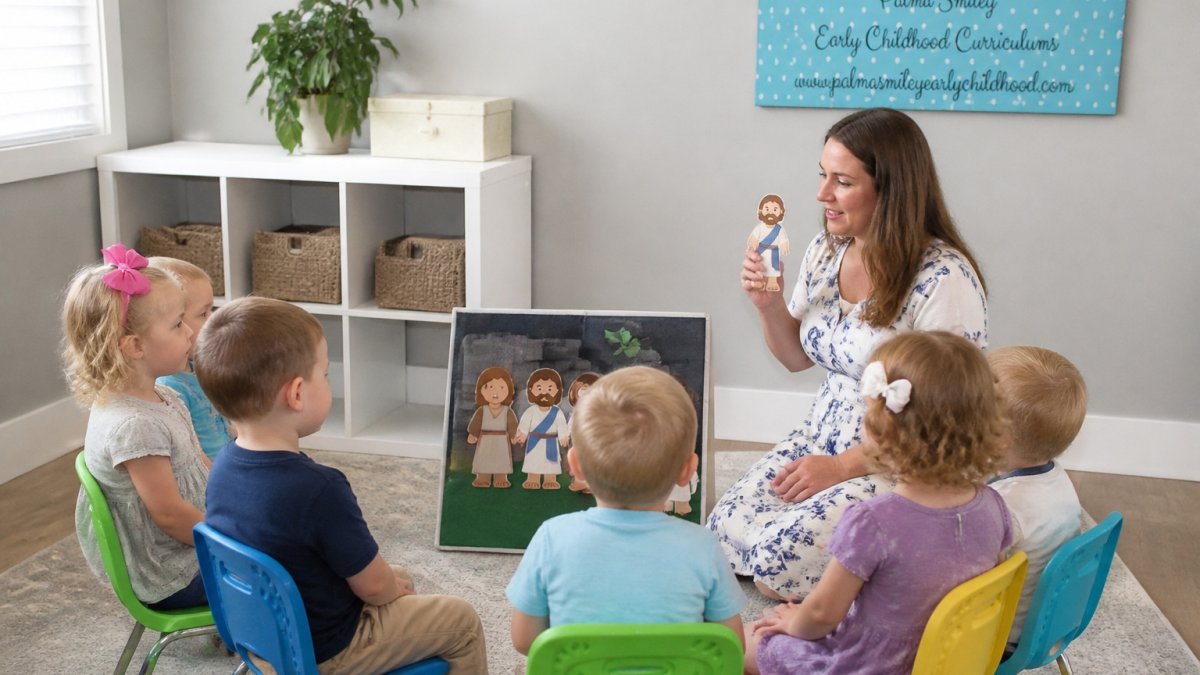
Use props if you have them (toys, puppets, pictures)
Pause for questions and reactions
Repeat the main truth once or twice
Activity (3 minutes)
Do something with their hands: color, play with toys, sing, or move
Connect the activity to the story: "We're drawing Jesus because Jesus loves us"
Pray together or sing a closing song
This works for one child at home or a group at church. Move on before attention fades.
Sample Lesson: Jesus Loves Me
Opening (2 minutes): Sing the song "Jesus Loves Me" together.
Story (5 minutes): "One day, Jesus was with a lot of people. There were so many people!
Pause and ask: "Does Jesus love you?" Wait for their answer.
Activity (3 minutes): Give each child a paper heart. Help them color it or stick stickers on it.
Close with a simple prayer: "Thank you, Jesus, for loving us. Amen."
Bible Activities for Toddlers That Build Engagement
Hands-On Activities and Play
Toddlers learn through their hands and bodies, not just their ears. Add activities and engagement skyrockets.

Simple hands-on activities for Bible lessons:
Coloring and stickers, Draw simple scenes from the story. This keeps hands busy while you talk.
Play with toys, Use toy animals for Noah's Ark and action figures for Bible characters.
Build with blocks, Build a boat for Noah or a wall for Jericho. Toddlers love knocking things down.
Sensory play, Use water for water stories, sand for desert stories, fabric for wrapping baby Jesus.
Movement games, Act out the story: be animals on Noah's Ark, walk like Jesus, dance to celebrate.
Puppet play, Toddlers are mesmerized by puppets and remember stories told through them.
The best activities connect directly to the story: color the scene, then act it out with toys.
Best For Toddlers ages 18 months to 3 years who need movement and hands-on engagement to stay focused. These activities work in homes, churches, and small group settings.
Using Songs and Repetition
Songs and repetition are toddler superpowers. A Bible truth set to music locks into memory like nothing else.
Why songs work for toddlers:
Rhythm and melody are what toddler brains love
Repetition reinforces the message without feeling like drilling
Singing is fun, so toddlers associate Bible time with joy
Songs give toddlers something to do with their bodies (clap, sway, jump)
Simple Bible songs to teach:
"Jesus Loves Me", The foundation song. Teach it first.
"Jesus Loves the Little Children", Shows Jesus's care for kids
"God Made Me", Celebrates God's creation of each child
"The B-I-B-L-E", Teaches what the Bible is
"Jesus in My Heart", Makes faith personal
Sing the same songs every week. Repetition isn't boring to toddlers, it's comforting, and they learn faster. Add simple motions: clap on certain words or sway side to side.
Singing at bedtime, in the car, or during meals keeps the message alive all week. You don't need a beautiful voice, just enthusiasm.
Bible Verses for Toddlers: Simple Truths They Can Remember
Bible verses for toddlers should be short, simple, and memorable. A toddler can't understand "For God so loved the world that he gave his one and only Son", but they can understand and remember "Jesus loves me."
Best Bible verses for toddlers:
Verse | Why It Works | How to Use It |
Jesus loves me | Simple, direct, personal | Sing it, say it daily, use in stories |
God loves you | Shows God's personal care | Say it when comforting a scared child |
Jesus is with you | Builds trust and security | Say it at bedtime or when child is nervous |
God made you | Celebrates the child's identity | Say it when teaching about creation |
Jesus helps me | Teaches reliance on Jesus | Say it when child faces a challenge |
I can pray | Introduces prayer as normal | Say it before meals and bedtime |
Teach one verse at a time. Say it daily for a week or two, and use it in stories, songs, and activities.
Write simple verses on index cards around the house, on the bathroom mirror, refrigerator, or car window. Every time you see one, say it out loud together.
Watch Out Avoid long verses or complex theology. A toddler who hears "Jesus loves me" a hundred times will remember it. A toddler who hears a complex verse once will forget it immediately. Keep it short, keep it simple, keep it repeated.
Managing Attention Spans and Behavior During Bible Time
Recognizing Your Toddler's Developmental Stage
Toddlers at different ages have different attention spans. What works for an 18-month-old won't work for a 3-year-old.
Age-based attention and learning:
18-24 months, Attention span: 5-10 minutes. Keep lessons very short, with lots of songs and movement. Expect short attention and move on without frustration.
2-2.5 years, Attention span: 10-15 minutes. They start understanding simple stories and enjoy repetition and familiar routines.
2.5-3 years, Attention span: 15-20 minutes. They follow simple stories with a beginning and end, ask "Why?" frequently, and want to participate and help.
Match lesson length and complexity to your child's age. A 10-minute lesson suits a 2-year-old but is too short for a 3-year-old.
Watch for fading attention: fidgeting, looking away, whining, or asking to stop. These are normal. When you see them, move to the next activity or wrap up, so Bible time stays fun, not a punishment.
Handling Difficult Stories and Big Questions
Some Bible stories include scary parts: a flood, a storm, a giant, a big fish. Toddlers lack the emotional tools older kids have.
How to handle difficult stories:
Emphasize God's protection, In the flood story, focus on God keeping Noah and the animals safe. Don't dwell on the water.
Skip the scary parts, If Jonah being swallowed scares your child, say "Jonah went into the whale's belly" and move quickly to "God kept Jonah safe."
Use a calm voice, Your tone matters more than your words.
Remind them of God's help, End every difficult story with, "And God helped him. God keeps us safe too."
Watch their reactions, If your child looks scared, stop and comfort them. Try that story again when they're older.
When toddlers ask big questions, "Why did people die?" or "Where is God?", keep your answers simple and true.
Simple answers to big questions:
"Why did people die in the flood?" → "People didn't listen to God, so God had to keep the world clean. But God kept Noah safe because Noah loved God."
"Where is God?" → "God is everywhere. God is with you right now. You can't see God, but God sees you and loves you."
"Why is Jesus gone?" → "Jesus went back to heaven to be with God. But Jesus is still with us in our hearts. We can talk to Jesus when we pray."
"Why do bad things happen?" → "Sometimes people make bad choices. But God is always good and always helps us."
These answers are honest but not scary. They acknowledge the question without overwhelming a young child with theology.
Tools and Resources That Make Teaching Easier
Understanding how to teach bible to toddlers is easier with the right tools.
Resources that help:
Bible storybooks for toddlers, Look for simple text, bright pictures, and toddler language. Board books are best because toddlers can handle them without tearing pages.
Puppet and props, Puppets, toy animals, and simple props bring stories to life. Toddlers pay more attention to a puppet than to a person talking.
Songs and music, Children's Bible songs on audio or video give you ready-made tunes and motions.
Activity supplies, Crayons, stickers, play-dough, blocks, and fabric scraps let you create hands-on activities quickly.
Lesson plans, Look for pre-made plans written specifically for toddlers, not older children.
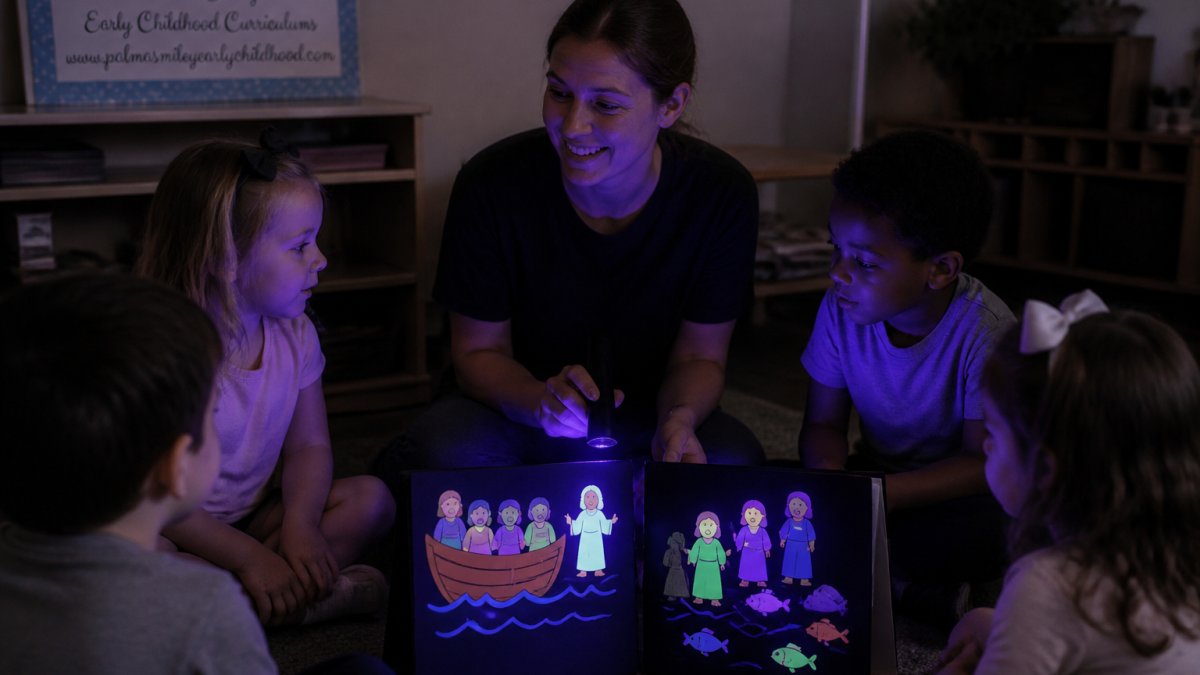
Visual teaching aids, Pictures, charts, and story boards help toddlers follow along. Palma Smiley Early Childhood offers specialized visual aids like black light story kits and peek boards that make Bible stories memorable and engaging for young learners.
The best tools are ones you'll actually use. If you won't make puppets, stick with board books and toys.
Many churches and homeschooling families keep a dedicated Bible time box: a few puppets, toy animals, a coloring book, crayons, and simple Bible storybooks.
Teaching Bible to toddlers doesn't require fancy materials or a theology degree, just consistency, simplicity, and genuine love for your child's spiritual growth.
Frequently Asked Questions
How long should a Bible lesson be for a toddler?
Most toddlers have attention spans of 5 to 10 minutes, depending on age. A 10-minute Bible lesson works well for 2 to 3-year-olds, while younger toddlers may engage for just 5 minutes. Keep lessons short, use repetition, and watch for signs your child is losing interest. Shorter, regular lessons are more effective than long ones that frustrate young learners.
What Bible verses are appropriate for a 2-year-old to learn?
Choose short, simple Bible verses that toddlers can understand and remember. Verses like 'Jesus loves me,' 'God is good,' and 'Jesus said, come to me' work well. Repeat the same verses regularly so toddlers begin to recognize them. Use songs to help them remember Bible verses for toddlers, pairing words with melodies they can follow. Avoid complex theology and focus on God's love and care.
What Bible stories are easiest for toddlers to understand?
Stories with simple characters, clear actions, and positive outcomes work best for Bible stories for 2-year-olds. Try Noah's Ark, David and Goliath (simplified), Jesus calming the storm, and the birth of Jesus. These stories have repetition, visual elements, and straightforward messages about God's protection and love. Avoid stories with frightening details or complex moral lessons.
How can I keep a toddler engaged during Bible time?
Use a mix of storytelling, songs, and hands-on Bible activities for toddlers. Include puppets, props, or picture books to hold attention. Let your toddler touch, move, and participate rather than just listen. Ask simple questions like 'Where is Jesus?' or 'What sound does the sheep make?' Sing Bible verses, use repetition, and keep the environment calm and distraction-free.
Subscribe to our newsletter

Comments