
What Sunday School Activities Work for Toddlers?

Last Updated: October 30, 2026
Quick Summary
Sunday school activities for toddlers work best when children can touch, move, and listen at once. Use soft props, repeated songs with motions, and short Bible stories tied to one clear idea. Keep each activity to a few minutes so attention stays on the lesson.
Use soft props, textured cloths, and felt pieces so children can touch the story.
Pair short songs with simple arm motions and repeat them each week.
Keep each activity to a few minutes and move on when interest fades.
Sweep the floor for choking hazards before every class and check all props.
Plan a 20 to 30 minute lesson split into short, predictable blocks.
Table of Contents
Why Hands-On Sunday School Activities Work Best for Toddlers
Sunday school activities for toddlers work best when young children can touch, move, and listen all at once.
Hands-on learning fits how very young children already explore, touching, shaking, and dropping things to see what happens. A soft cotton-ball cloud, a felt animal, or a glow star gives a child something real to connect with the story.
Here is what hands-on teaching usually looks like in a nursery or Sunday school room:
Touch: Soft props, textured cloths, and felt pieces
Movement: Songs with arm motions, clapping, and simple actions
Sound: Repeated Bible phrases and short, familiar songs
A common mistake is treating toddler class like a mini adult lesson.
Setting Up the Room for Sunday School Activities for Toddlers
A well-set room makes toddler activities easier to run and safer for everyone. Before the children arrive, clear the floor of small objects, check that all props are clean and in good repair, and set out only the materials for the lesson.
Divide the room into simple zones: a soft carpet area for story time and songs, a low table or mat for craft and sensory props, and a separate corner for quiet play or rest.
Safety checks that matter for ages 1-3
Toddlers explore with their mouths, so choking hazards are the first thing to scan for. Walk the floor on your hands and knees before class to spot dropped beads, button eyes, and stray craft pieces.
Other setup checks worth building into your routine:
Clean and inspect props: Wipe hard toys and table surfaces before and after each session; wash cloth and felt props on a regular schedule; retire any prop with a loose seam, cracked plastic, or peeling paint.
Anchor the furniture: Secure shelving and climbing equipment to the wall, and keep cords, bags, and adult belongings out of toddler reach.
Control the exits: Know how the door latches, keep a volunteer near the door during pick-up, and use a sign-in sheet so every child is accounted for.
Adapting the room for mixed ages and different needs
Most church nurseries mix a wide age range. Set up a low-energy corner with soft books and a quiet basket for children who need a break, and keep the main story area open enough that a child who needs to move can pace at the edge. For sensory sensitivities, offer a quiet alternative to loud songs or bright lights. For children still learning English, pair every spoken phrase with a motion or a prop so meaning is carried by the hands as well as the words.
Getting volunteers on the same page
Volunteers also need a clear plan. Share the lesson outline, song order, and safety rules before class, and assign roles: one adult leads the story, one handles props and cleanup, and one watches the door and wandering children. A five-minute huddle before the children arrive is usually enough to align the team and flag any child who needs extra attention.
Pro Tip Keep a labeled bin for each lesson so volunteers can find materials quickly, and tape a simple picture schedule to the wall at toddler eye level. Children who can see what comes next settle faster between activities.
Watch Out Never leave a toddler unattended near water, small props, or an open door, even for a moment. Pair up volunteers so one adult is always free to watch the room while another handles a diaper change or a upset child.
Bible Activities for Toddlers Built Around Creation Stories
Creation is a strong starting point for toddler Bible lessons because it is full of things children can see and touch, light, water, animals, plants, and people.
On the day God made the animals, bring a few felt or plush animals and let each child choose one to "hide" behind a box, then reveal it and name it together.
Try these Creation-based activities:
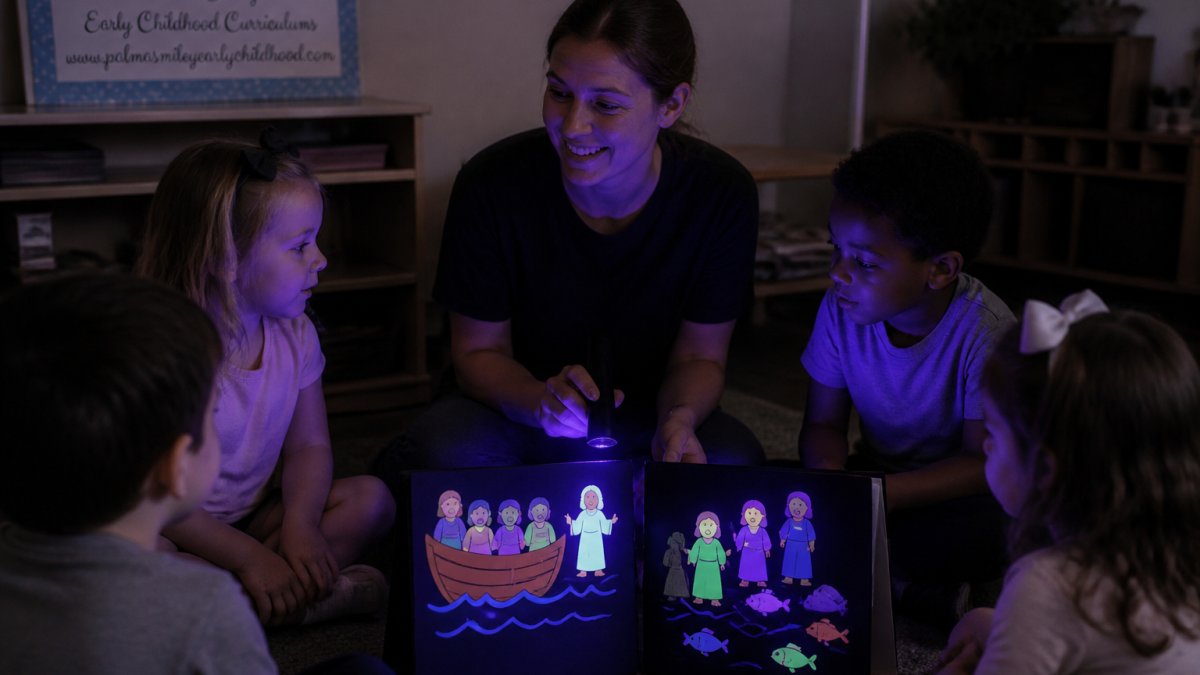
Light: Shine a flashlight on the wall and let toddlers reach for the beam
Water: Use a shallow tub with floating toys to talk about the seas
Animals: Pass a felt animal around the circle and make each animal's sound
Keep each activity to a few minutes. When a child loses interest, move to the next piece of the story rather than pushing harder.
Bible Songs for Toddlers With Repeated Motions
Songs are one of the most effective tools in toddler Bible class. Repeated words and motions help children remember the story and join in without much instruction.
Choose songs with short lines and easy actions.
Tips for leading songs with toddlers:
Sing the same song at the start and end of class to mark the routine
Use big, slow motions that children can copy
Pair the song with a prop, such as a puppet or a shaker
Some teachers worry about singing badly. Toddlers do not mind. What they want is a warm voice, a steady beat, and an adult who is clearly having fun.
Sensory Bible Activities for Toddlers Using Props and Touch
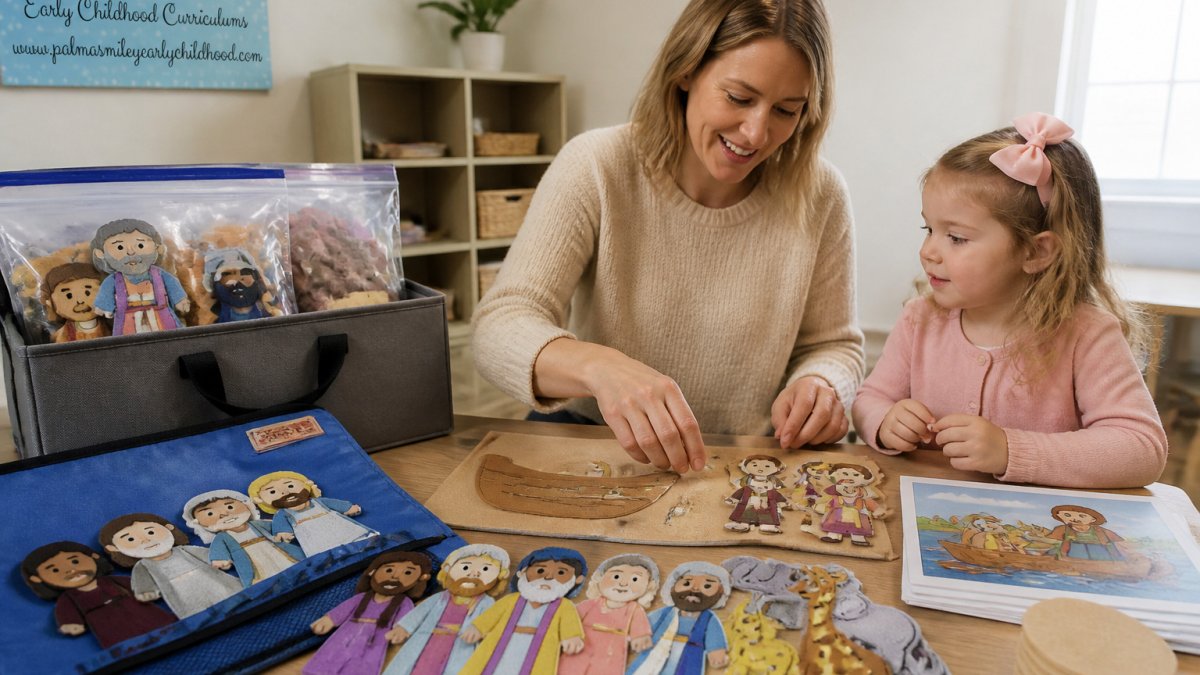
Sensory activities let toddlers learn with their hands, which suits how young children explore. Story bags are an easy way to bring this into class: a few props, a short script, and a song that together retell one Bible story.

Pull out one figure at a time as you tell the story, and let each child hold the matching toy. The touch and movement help the story stick.
Story-linked sensory activities by Bible theme
The strongest toddler activities are tied to a specific story or learning objective, not chosen at random. Here are a few story-linked ideas with materials, preparation time, and the takeaway each one reinforces:
Bible story or theme | Sensory activity | Materials | Prep time | Takeaway |
Creation, Day 1 (light) | Dim the room and show glow stars on the ceiling; let children reach for a soft flashlight beam | Glow stars, small flashlight, soft blanket | 5 min | "God made the light" |
Creation, Day 2 (water) | Shallow tub with floating toys; children pat the water and name what floats | Shallow tub, floating toys, towels | 10 min | "God made the seas" |
Creation, Day 4 (sky) | Cotton-ball clouds; children pinch, pull, and pat the soft cotton | Cotton balls, shallow tray | 5 min | "God made the sky" |
Creation, Day 6 (animals) | Pass a felt or plush animal around the circle; each child makes the animal's sound | Felt or plush animals | 5 min | "God made the animals" |
Noah's Ark | Textured cloth waves; children wave blue fabric and rock a toy boat | Blue fabric, toy boat | 5 min | "God kept Noah safe" |
Baby Moses | Soft basket with a doll; children pat the basket and rock the baby gently | Small basket, soft doll | 5 min | "God cared for baby Moses" |
Keep each activity to a few minutes, and when a child loses interest, move to the next piece of the story rather than pushing harder. Swap in whatever props your church already owns, and label each bin with the story name so volunteers can grab it quickly.
Building your own story bag
A story bag works best when it holds three things: a prop for each story beat, a one-page script with short repeated phrases, and a song with motions that matches the theme. Pull out one prop at a time as you tell the story, and let each child hold the matching item. The repetition of the same bag and song week after week is what helps toddlers remember, many will reach for the bag and start the motions before you begin.
Try these low-prep sensory props:
Cotton-ball clouds: Let toddlers pinch and pull soft cotton to represent clouds in the sky
Textured cloth: Pass rough, smooth, and fuzzy fabrics to talk about the world God made
Glow stars: Dim the room and show stars on the ceiling during the Creation lesson
Safety and adaptations for sensory play
Watch for allergies and choking hazards before using any sensory material. Keep items large enough that they cannot fit in a child's mouth, and check every prop before each session. Avoid food-based sensory items when allergies are unknown, and offer a scent-free alternative for children with sensitivities. For children with limited motor control, place props on a low tray within reach.
Watch Out Never use small beads, buttons, or loose glitter with toddlers who still mouth objects. Choose large, washable props and inspect them before every session.
Key Takeaway A good sensory activity does three things at once: it connects to one clear Bible truth, it gives every child something to touch, and it can be packed into a labeled bin in under ten minutes. If an activity misses one of those, simplify it before class rather than during it.
Structuring Toddler Bible Lessons: A Timed Class Plan
A simple timed plan keeps toddler class focused and predictable. Most toddlers do best with a lesson of about 20 to 30 minutes, broken into short blocks so no single activity drags on. Here is one sample structure that many nurseries follow:
Time | Activity | Purpose |
0-3 min | Welcome song | Mark the start and gather children |
3-8 min | Story bag or puppet story | Introduce the Bible story |
8-13 min | Hands-on prop activity | Let children touch and explore |
13-18 min | Movement song | Burn energy and repeat the key idea |
18-23 min | Simple craft or sensory play | Reinforce the lesson |
23-28 min | Closing prayer and goodbye song | End calmly and send children home |
Adjust the times to fit your group. If children are restless, shorten the story and add another song. If they are engaged, let the activity run a little longer. The goal is a steady rhythm toddlers can learn to expect.
Planning Your Next Nursery Session With Palma Smiley Resources
Planning ahead makes Sunday school far less stressful for volunteers. Pick the Bible story for the week, choose one or two activities, and gather the props before the day arrives.
Palma Smiley Early Childhood resources can support that planning, including downloadable song and lesson CDs and story kits.
Pricing depends on quantity, dates, and delivery, so check the Palma Smiley Early Childhood website for current prices or to request a quote.
Frequently Asked Questions
What are some easy Sunday school activities for toddlers?
Start with activities that need little preparation and repeat the same motions each week. Song-based circle time with hand movements, a cotton-ball cloud for touching during a Creation story, and a simple animal puppet that appears at the same point in every lesson all work well. Toddlers respond to routine, so choosing three or four activities and repeating them across several Sundays helps children anticipate what comes next and stay engaged longer.
How do you teach Bible stories to 2-year-olds?
Keep each story short and built around one main idea, such as God making the sky or God loving us. Tell it with a few physical props, use a puppet or felt figures to act out the key action, and repeat one phrase several times. Two-year-olds learn through movement and repetition more than through long explanations, so pause often and invite children to copy simple gestures like lifting arms to show the sky.
How long should a Sunday school lesson be for toddlers?
Toddlers usually hold focused attention for short stretches, so plan a lesson that moves between activities every few minutes rather than sitting still for long periods. A workable structure is a welcome time, a song, a short Bible story with props, a movement activity, and a closing prayer. Keep transitions predictable with the same song or bell each week so children know when the lesson is changing.
How can Sunday school volunteers manage a toddler group?
Assign one volunteer to lead activities and another to handle transitions, diapers, and any children who need a break. Keep materials cleaned between uses, check that small props are too large to swallow, and set clear routines with the same hello song and goodbye ritual each week. Share a brief note with parents after class about what the children did, so families can repeat the story and song at home.
Teaching toddlers about God is a gift to the whole church family. Choose one activity this Sunday, sing the song with a big smile, and watch the little ones light up. Get started with Palma Smiley Early Childhood's toddler resources and bring hands-on Bible learning into your nursery.

Comments