
7 Steps to Plan a One Day Toddler Bible Lesson

Last Updated: November 2, 2026
Quick Summary
Plan a toddler Bible lesson by choosing one clear takeaway, then picking a short, concrete Bible story that fits it. Build a 30-minute timed schedule that changes activity every five to seven minutes, and gather simple props like a story bag, puppet, and sensory items.
Write one learning objective at the top of your plan and cut any activity that does not serve it.
Run the lesson about 30 minutes and change activity every five to seven minutes with movement built in.
Give a warning before each transition and use the same cue every week to prevent tears.
Keep every prop large enough that it cannot be swallowed, and never use beads, buttons, or water beads.
Send home a four-line note with the takeaway, one question, one song, and one small activity.
Table of Contents
Start With One Clear Takeaway for Your Toddler Bible Lesson
A toddler Bible lesson works best when it carries one clear takeaway. A single truth a two-year-old can carry home, such as "God made the world," gives the lesson a clear center.
That is the heart of how to plan a one day toddler Bible lesson. You are not building a semester. You are building one short, warm, repeatable hour.
Why One Learning Objective Beats Five
Most first-time volunteers try to teach too much. They pack in three stories, a craft, and a memory verse. The children remember none of it.
A single learning objective changes that. Pick one sentence and say it, sing it, and show it all morning.
One takeaway keeps the teacher calm and focused.
One takeaway gives toddlers a hook to hang new words on.
One takeaway makes follow-up at home simple for parents.
Choose Bible Stories for Toddlers That Fit the Takeaway
Pick the story last, not first. Once your takeaway is set, the story chooses itself. "God made the world" points to Creation in Genesis. "God keeps us safe" points to Noah and the ark.
Keep the story short and concrete. For a ready-made example, this Creation lesson CD for toddlers includes a sample lesson taught age-appropriately. Toddlers understand animals, water, light, and family.
Creation for a "God made everything" lesson.
Noah for a "God takes care of us" lesson.
Baby Moses for a "God loves babies" lesson.
Build Your Toddler Sunday School Lesson Plan Around a Timed Schedule
A toddler Sunday school lesson plan should run about 30 minutes, with movement built in. Attention spans are short, so change activity every five to seven minutes. The schedule matters more than the content.
Our Thrifty Homeschool
Here is a simple rhythm that works in a church nursery or a living room:
Welcome and free play (5 minutes): let children settle.
Hello song with motions (3 minutes): same song every week.
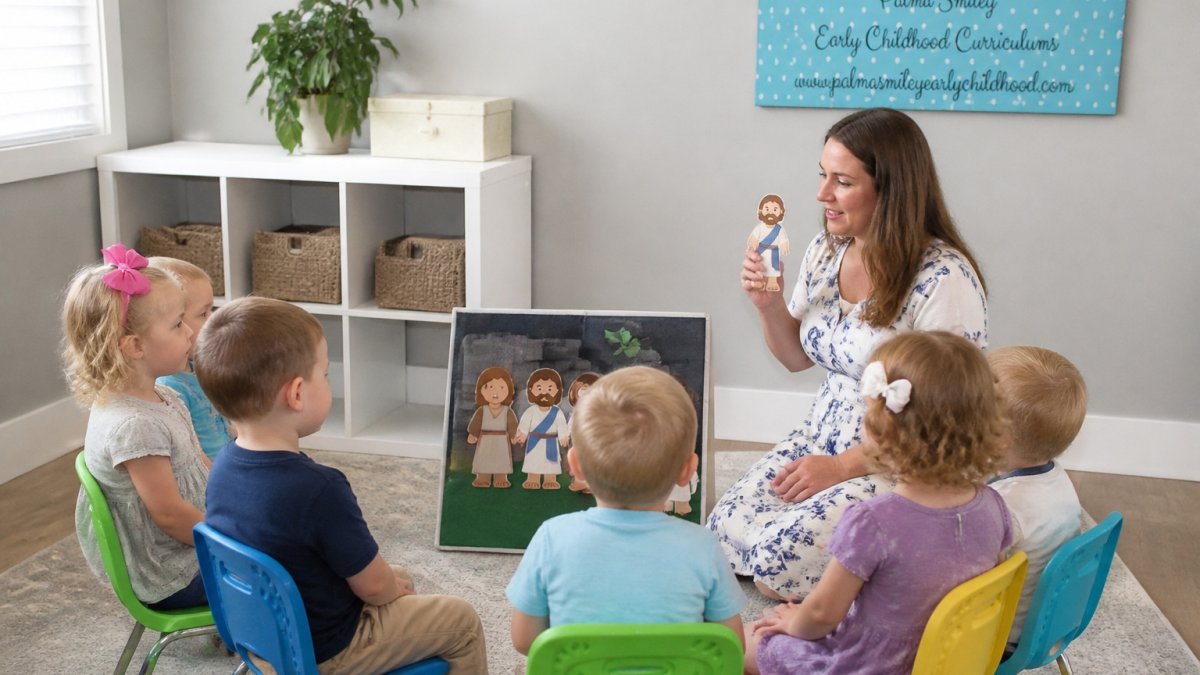
Story with props (5 minutes): puppets, peek boards, or a story bag.
A Sample 30-Minute Run-Through
Say your takeaway is "God made the world." You greet each child by name. You sing the same hello song you always sing. You open a story bag and pull out a toy animal, then a sun, then a little pot of water. You tell the Creation story in five sentences. Children pat cotton-ball clouds and stack foam blocks. You sing a Creation song twice, with the same hand motions.
Toddler Attention Spans and Transition Cues
Build your plan around the reality that toddlers' attention is short, not against it.
Transitions cause more tears than content. Give a warning before each change: "One more song, then we clean up." Use the same transition cue every week, a bell, a puppet peek, or a specific song, so children learn what comes next. A predictable routine lowers anxiety and keeps the room calm.
Pro Tip Sing the same clean-up song every week. Toddlers who know the song start tidying without being told.
A Minute-by-Minute Timed Schedule for One Day
Times are approximate; adjust to your room and your children.
Time | Activity | What the Volunteer Does |
0:00-0:05 | Welcome and free play | Greet each child by name, let them settle with a soft toy |
0:05-0:08 | Hello song with motions | Same song every week; repeat the takeaway line in the lyrics |
0:08-0:13 | Story with props | Open the story bag, pull out one prop at a time, tell the story in five sentences |
0:13-0:18 | Sensory activity | Guide children to touch, sort, or build with the props |
0:18-0:21 | Song with repeated motions | Sing the takeaway song twice with the same hand motions |
0:21-0:23 | Prayer and goodbye | Two-line prayer, gentle goodbye song |
0:23-0:30 | Free play and pick-up | Children play quietly while caregivers arrive; volunteer resets the room |
This schedule leaves buffer time at the end for late pick-ups and room reset. The key is not the exact minutes but the rhythm: settle, sing, story, touch, sing, pray, play. Repeat that rhythm every week and toddlers will anticipate each step.
Learning Objectives and a Single Takeaway
Write one learning objective at the top of your plan: "The child will hear that God made the world and will point to one thing God made." That is measurable, age-appropriate, and simple enough for a volunteer to remember. Every activity in the schedule should point back to that one takeaway. If an activity does not serve the takeaway, cut it.
Key Takeaway A timed schedule with predictable transitions and one clear learning objective turns a collection of activities into a lesson toddlers can actually absorb.
Gather Materials and Low-Prep Alternatives
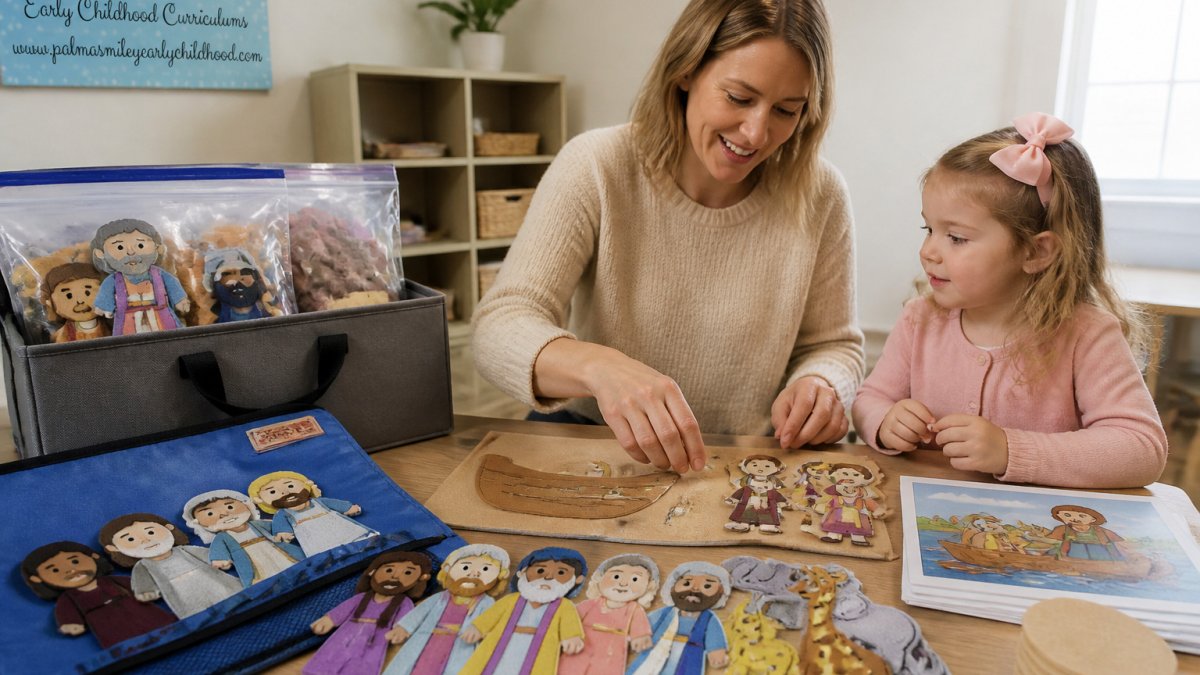
You need less than you think. For a fuller checklist of what supplies you need for Sunday school, see our supply guide. A story bag, a puppet, and a few textured props carry most lessons. The rest is optional.
Core Materials Checklist
Print this list and tape it inside your supply bin. Check items off before Sunday.
A children's Bible or picture storybook
One puppet or soft toy
A cloth bag for surprise reveals
Setup Guidance
Set up the room before children arrive. Lay the story bag on a low rug where children will sit. Put sensory props in shallow bins so toddlers can reach them without dumping everything at once. Keep wipes and the clean-up bin near the door so you can wipe shared items as children leave. Dim the lights slightly if your room has bright overheads, soft light helps toddlers settle.
Low-Prep Alternatives and Household Substitutions
When time is short or your supply bin is empty, swap in what you already have:
No puppet? Use a rolled sock with a face drawn on.
No felt board? Print two pictures and hold them up.
No craft? Swap it for a sorting activity with toy animals.
A common mistake is buying too much before you know what your room and your volunteers can handle. Start small.
Safety, Sensory Needs, and Accessibility
Every prop must be large enough that it cannot be swallowed. Check toys for small parts, loose eyes, and sharp edges before each class. Know each child's allergy and pickup details. Wipe shared items between classes.
Some toddlers are sensitive to certain textures, sounds, or lights. Offer a quiet corner with a soft blanket for a child who needs a break.
Watch Out Never use small beads, buttons, or water beads with toddlers. They are choking hazards. Use large foam shapes or fabric squares instead.
Caregiver Follow-Up and Reinforcement
A short note home doubles the reach of your lesson. Parents and caregivers can repeat the takeaway during the week, and toddlers thrive on repetition.
Keep the note to four lines:
This week's takeaway: "God made the world."
One question to ask: "What did God make?"
One song to sing: the same one from class.
If families want to keep going at home, point them to our downloadable curriculum and songbooks for babies and toddlers. That keeps the lesson alive between Sundays.
Plan Sensory Bible Activities for Toddlers
Sensory Bible activities for toddlers let children touch the story, not just hear it. A child who pats a cotton-ball cloud remembers "God made clouds" far longer than a child who only listened.

Sensory props that suit a Creation lesson include:
Cotton-ball clouds: soft to touch, easy to hold.
Glow stars: dim the lights and let children hold them.
Toy animals: name each one as God's creation.
Keep every prop large enough that it cannot be swallowed, and wipe shared items between classes.
Write Short Bible Lessons for Preschoolers That Leave Room to Move
Short Bible lessons for preschoolers should last five minutes or less, with movement woven through. Preschoolers learn through their bodies. Sitting still is not the goal.
Use songs with repeated motions. "God made the sun" can come with arms raised high. "God made the fish" can come with hands swimming.
Read aloud from a picture Bible and pause to let children point. Ask one or two simple questions, like "Who made the trees?" Then move again.
Transitions often cause more tears than content with this age group.
Keep Volunteers, Safety, and Clean-Up Simple
Volunteers need a plan they can run without a theology degree. Write your lesson on one page: takeaway, story, props, song, prayer. Hand it to the volunteer at the door.
Safety basics:
Two adults in the room at all times.
Check props for small parts and sharp edges.
Keep cleaning wipes and a first-aid kit within reach.
Know each child's allergy and pickup details.
Clean-up in three steps:
Sing a clean-up song so children help.
Wipe shared props and bag them by lesson.
Reset the room before you leave.
A common mistake is skipping the reset. The next volunteer walks into chaos, and lessons get shorter and less calm over time.
Send Home a Caregiver Follow-Up Note
A short note home doubles the reach of your lesson. Parents and caregivers can repeat the takeaway during the week, and toddlers thrive on repetition.
Keep the note to four lines:
This week's takeaway: "God made the world."
One question to ask: "What did God make?"
One song to sing: the same one from class.
One small activity: point at clouds and say, "God made that."
If families want to keep going at home, point them to our downloadable curriculum and songbooks for babies and toddlers. That keeps the lesson alive between Sundays.
Frequently Asked Questions
How long should a toddler Sunday school lesson be?
Aim for 20 to 30 minutes of structured time for children under three, and up to 35 minutes for preschoolers. Toddlers lose focus quickly, so build the lesson from short segments: a welcome song, a five-minute story, one sensory activity, a prayer, and a goodbye song. If you notice squirming or wandering, cut the activity short rather than pushing through. A short lesson the children enjoy is more effective than a long one they endure.
What Bible stories are best for toddlers?
Pick stories with simple action, repetition, and a clear truth. Creation, Noah and the ark, baby Moses, David and the little sheep, and Jesus welcoming the children all work well. Look for stories you can tell with a prop, a repeated sound, or a song. Avoid stories with frightening or complicated details for this age group. One story told slowly with a puppet or peek board will hold attention better than three stories rushed together.
What supplies do you need for a toddler Bible lesson?
Keep the list short: a children's Bible or story cards, one prop per story, a sensory item such as cotton balls or a textured cloth, a simple craft, and a take-home note for parents. Low-prep alternatives work too, like paper plate crafts, felt boards, or a song with hand motions.
How do you keep toddlers engaged during Sunday school?
Use movement, repetition, and sensory props. Sing the same welcome song every week so children know what comes next. Let them touch the story props, make animal sounds, and do hand motions. Change activities every five to seven minutes and give a clear transition cue, like ringing a soft bell. Keep the room calm and uncluttered. When a child loses interest, redirect gently rather than correcting, and let them rejoin when ready.
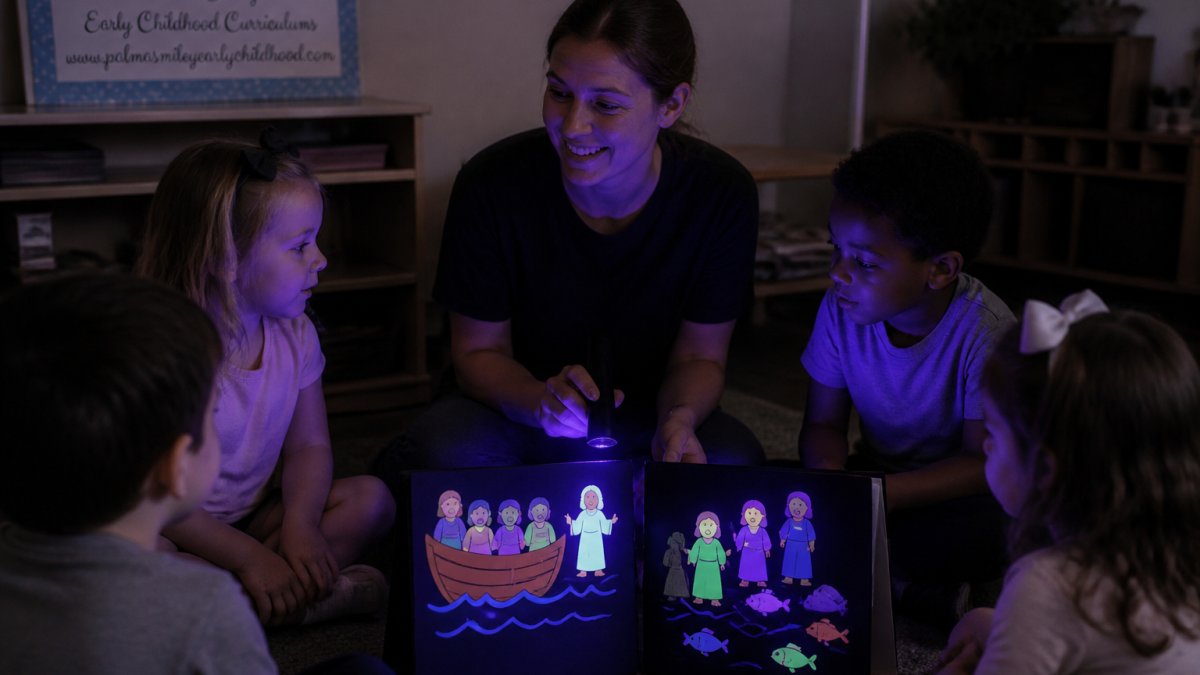
Planning one toddler Bible lesson is not about doing more. It is about choosing one truth and repeating it with warmth, props, and song until a little heart holds it. Palma Smiley Early Childhood builds curriculum and teaching aids, including black light story kits, puppets, and peek boards, to make that work easier for volunteers and parents. Subscribe to our newsletter and get ready-made tools that help you plan a toddler Bible lesson with confidence.
Comments